
 Atresia of the ear canal is a medical condition that means the ear canal is a dead end that is not connected to the rest of the deeper structures of the ear. It is usually a congenital condition that children have at birth. It often coincides with microtia of the ear, a medical condition that means under development of the external ear. As such, these children have hearing loss and cosmetic deformity. Comprehensive treatment of microtia and atresia requires a team including an audiologist, a neurotologist (ear surgeon), and plastic surgeon.
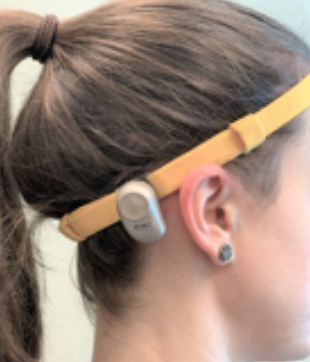 Initial treatment of atresia involves rehabilitating the hearing when possible. Temporary correction is usually implemented in the form of a bone conduction hearing aid worn on the head and held in place with a headband. This precedes surgical procedures, giving the newborn time to grow.
 In considering permanent surgical options, correction of cosmetic deformity occurs before correction of the ear canal atresia. This is managed by a plastic surgeon. They may recommend a reconstructed ear made from autologous rib graft or a reconstructed ear with a medpore implant. Families may also choose to have a prosthetic ear that is worn on the head with titanium implants in the skull. Once the cosmetic procedure is completed. Attention is turned to planning atresia surgery.
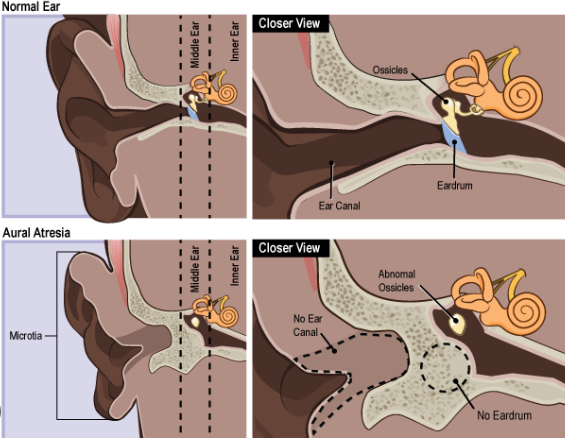 An important distinction for the neurotologist to make is whether a child has isolated atresia or deeper malformations of the ossicles (hearing bones) and the cochlea (inner ear). In cases of severe ossicular and cochlear anomalies, reconstruction of the ear canal may be a moot point.
In cases of isolated atresia, a neurotologist may recommend the creation of an ear canal to connect the deeper structures of the ear to the outside world. This surgery is complex and involves meatoplasty (creating an opening for the ear canal), canalplasty (creating the bony ear canal), tympanoplasty (creating the end of the ear canal and eardrum), and skin grafting (creating the lining of the ear canal). Once the atresia repair has healed, hearing is possible, but the acuity varies considerably. The ear canal may require special care including water avoidance and specialized cleaning in the doctor’s office.
 Bone conduction is an exciting alternative option for patients with ear canal atresia. The neurotologist will implant a hearing device under the skin. The implant communicates with a processor worn near the patient’s ear. The processor gathers sound from the environment, sends this information to the implant, and the implant sends sound waves into the inner ear via bone conduction. This effectively bypasses the ear canal atresia. Hearing is generally better with bone conduction implants than with atresia repair and patients do not have issues with water avoidance or ear cleanings.
Atresia surgery and management of its associated conditions is a complex process best managed by a team of experts. Hearing loss is initially rehabilitated with a bone conduction hearing aid. Cosmetic deformities are corrected by plastic surgeons. Neurotologists address atresia by surgical creation of an ear canal or through bypassing the atresia with a bone conduction implant. Hearing outcomes are better with bone conduction implants.